FeaturesPricingTopicsBlogGuides
← All topics

Archaeology

34 articles from Phys.org, Medium, Ars Technica and more. Refreshed every few hours.

Phys.org

God-faced rings may have identified Mesoamerica's long-distance merchants

Over 1,000 years ago, a Mesoamerican may have been traveling through foreign lands. Upon arriving at his destination, he held up his hand, adorned with a ring showing the face of a god, but what was this ring's purpose?

ArchaeologyScience
26 Nov 2026
Phys.org

Giant deer bones may push human arrival in Ireland back by 1,000 years

A team of archaeologists and scientists has uncovered tantalizing new evidence that Late Upper Paleolithic hunter-gatherers may have lived in southern Ireland around 13,500 years ago—nearly a millennium earlier than currently confirmed.

ArchaeologyScience
26 Nov 2026
Phys.org

Fermented milk may have held ritual power in Neolithic Denmark

Experimental archaeology sheds light on the substances fermented in Neolithic Scandinavian pottery and deposited in tombs, suggesting fermented dairy products held symbolic significance in prehistoric funerary rituals.

ArchaeologyScience
26 Nov 2026
Ars Technica

Homo erectus lived in the rainforest alongside Denisovans

You can learn a surprising amount from a few loose teeth.

ArchaeologyTechnologyScience
24 Nov 2026
The Art Newspaper

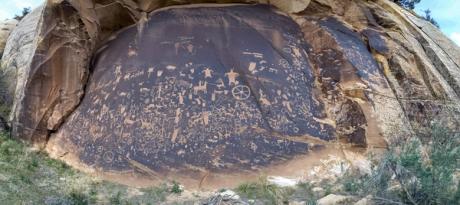
Flooding in southwestern US underlines risks of Trump administration’s reduction of Bears Ears National Monument

Recent floods in the Four Corners region of the southwest posed relatively little immediate risk to archaeological sites, but exposed risks due to scaling back of protected areas

ArchaeologyArt
23 Nov 2026
Phys.org

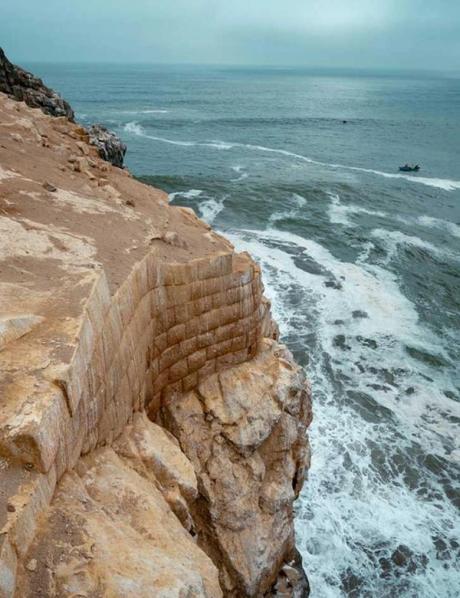
Babies in ancient Greek colony started solid food at 3 months but nursed for nearly 4 years, chemical signatures suggest

Over 2,500 years ago, Himera was a Greek colony inhabited by local Sicilians, Phoenicians and Greeks. Despite their diverse cultural backgrounds, they all shared one thing: they began weaning their babies early and continued for a long time.

ArchaeologyScience
21 Nov 2026
Phys.org

Ancient bison hunting site in Texas challenges long-held assumptions

For decades, archaeologists questioned whether Native American communities in the Southern Plains hunted bison by driving herds over cliffs, a sophisticated technique widely documented farther north.

ArchaeologyScience
20 Nov 2026
Phys.org

Digital imaging workshop aims to reveal secrets in medieval manuscripts

Researchers recently used multispectral imaging technology to try to uncover hidden information from medieval manuscripts at the Rare Book and Manuscript Library at the University of Illinois Urbana-Champaign. The library hosted a digital imaging workshop in early October that served as a pilot study for how the technology can help analyze fragile, centuries-old documents.

ArchaeologyScience
20 Nov 2026
Phys.org

Should we save every old building?

When you visit one of Norway's open-air museums, you can experience a piece of old Norway: log-built timber houses, farmsteads and farm complexes, often situated in a historic cultural landscape.

ArchaeologyScience
19 Nov 2026
Phys.org

Archaeology students find Roman treasures on first excavation

The discoveries include gold jewelry, inscriptions and a finely carved gemstone, and were made at a site in Redesdale, Northumberland.

ArchaeologyScience
18 Nov 2026
Phys.org

Milk and wine used in Menorcan funerary rituals over 2,000 years ago

In the Late Iron Age, or post-Talayotic period, over 2,000 years ago, Menorca and the other Balearic Islands experienced increasing connectivity with the wider Mediterranean. However, they also maintained distinctive local funerary traditions, such as burying their loved ones in rock-cut tombs, or artificial caves. Some of these caves contained external courtyards located in front of the burial chambers where animal offerings might have been made. Archaeologists even suspect that perishable food

ArchaeologyScience
16 Nov 2026
Phys.org

Archaeologists uncover a witness to the Neolithic revolution

Radiocarbon dating and isotope analysis of an immaculately preserved skeleton from Mesolithic Denmark indicate that the individual lived through the introduction of agriculture and adapted his diet to the change, providing a unique "eyewitness account" of one of humanity's most significant technological revolutions.

ArchaeologyScience
16 Nov 2026
Phys.org

When the Saudi desert was green: A 125,000-year-old lakeside reveals how early humans lived

Megafauna remains, stone tools and rare plant material recovered from the 125,000-year-old lakeside site of Uruq al-Julaybah in Mundafan, southern Saudi Arabia, provide one of the most detailed pictures yet of prehistoric human life in Arabia. Together, the discoveries reveal how early people lived, hunted and used their environment during a greener, wetter period in Arabian history.

ArchaeologyScience
15 Nov 2026
Medium

Write a post on Medium: Mysterious discoveries from the past that still puzzle scientists.

Somewhere beneath ancient ruins, inside forgotten manuscripts, and beneath the ocean floor, history has left behind questions that modern… Continue reading on Reflections & Realities »

ArchaeologyScienceHistory
15 Nov 2026
Phys.org

Does your culture shape how you look at art? What an eye‑tracking study in Sudan revealed

Today, Old Dongola is an abandoned settlement on the banks of the Nile in northern Sudan. Hundreds of years ago, however, this place looked very different.

ArchaeologyScience
14 Nov 2026
Phys.org

Archaeologists shed new light on wealth and status among Europe's early herders

How unequal were prehistoric societies? And how can archaeologists measure wealth in cultures that left behind no written records, no tax registers and no census data?

ArchaeologyScience
14 Nov 2026
Phys.org

How Chinese brewers refined their booze 5,000 years ago

More than 5,000 years ago, brewers in eastern China appear to have used red mold to make rice alcohol, then strained the drink through cloth. Microscopic residues on ancient pottery show evidence of both the fermentation method and the filtering process to separate the liquid from leftover grain.

ArchaeologyScience
13 Nov 2026
Phys.org

Mystery origin of iconic Stonehenge Altar Stone deepens as search narrows

The hunt for the source of Stonehenge's mysterious Altar Stone has entered a new phase after scientists ruled out several previously proposed locations and moved a step closer to identifying its origins.

ArchaeologyScience
5 Nov 2026
Medium

Ötzi the Iceman: The Man Who Remained Hidden in the Ice for 5,300 Years

Ötzi the Iceman was carrying his belongings when he died in the Alps. Scientists later discovered his last meal, 61 tattoos, and an arrow… Continue reading on Medium »

ArchaeologyScienceHistory
5 Nov 2026
Phys.org

Centuries-old cemetery helps scientists link climate shocks to Industrial Revolution disease

During England's Industrial Revolution, when the country's farming-based economy transformed into an industrial one between roughly 1760 and 1840, pollution, harsh working conditions, inadequate housing and limited access to sunlight drove disease. Rickets, in which the growing skeleton fails to properly mineralize, was commonplace among children. Traditionally, urbanization, latitude and socioeconomic status were considered the main drivers. A factor that has largely been overlooked is climate.

ArchaeologyScience
5 Nov 2026
Phys.org

Ancient coins suggest influential Iron Age king was female

Bournemouth University (BU) archaeological research has revealed that Iron Age British ruler "Verica," who was central to the Roman invasion of Britain in A.D. 43, was in fact a woman. This discovery rewrites the history of early Roman Britain.

ArchaeologyScience
5 Nov 2026
Phys.org

Hundreds of Ice Age rock art engravings discovered hidden in plain sight

Archaeologists have discovered the third-largest assemblage of Ice Age cave art ever found in Mediterranean Iberia in a region thought devoid of cave art, transforming our knowledge of Paleolithic European art.

ArchaeologyScience
4 Nov 2026
Medium

The Men Who Sold the Pyramids (And Got Away With It)

For $5, you could buy a real pyramid near Faiyum in the 1920s. Tourists did. Continue reading on Medium »

ArchaeologyTravelHistory
4 Nov 2026
Phys.org

Who killed British archaeologist James Starkey? Archival records shed light on an 88-year-old mystery

Eighty-eight years after pioneering British archaeologist Starkey was shot dead while traveling from the ancient city of Lachish to Jerusalem, researchers say they have uncovered compelling new evidence explaining who was behind his murder—and why he was targeted.

ArchaeologyScience
4 Nov 2026
Phys.org

Boat burial reveals leprosy strain in fifth-century Germany

Visigothic and Vandal forces marched into Italy and conquered Rome; the Huns spread fear and terror on their campaigns through Western Europe; the Franks expanded their domain southward—the fifth century was an era of profound, often violent upheavals in Europe, and at the same time one of great mobility. Researchers from the Institute of Clinical Molecular Biology (IKMB) at Christian-Albrechts-University in Kiel and the Lower Saxony Institute for Historical Coastal Research (NIhK) have now iden

ArchaeologyScience
3 Nov 2026
Medium

पीपल का पेड़ हिंदू धर्म में पवित्र क्यों माना जाता है?

क्या हजारों साल पहले हमारे पूर्वजों ने पीपल के पेड़ को केवल धार्मिक आस्था के कारण पवित्र माना था, या इसके पीछे प्रकृति, पर्यावरण और मानव… Continue reading on Medium »

ArchaeologyEnvironmentScience
3 Nov 2026
Phys.org

Analysis of Inca mummies identifies the drugs used in their most important sacrificial ritual

Archaeologists have performed toxicological analysis on the mummified remains of people sacrificed at mountain shrines across the Inca Empire, revealing the psychoactive substances they consumed before their deaths.

ArchaeologyScience
3 Nov 2026
Ars Technica

Why large dogs age faster than small ones, and other October research highlights

Plus invisible tattoos, medieval skeleton gets an ID, trapping a single antimatter particle, and more.

ArchaeologyTechnologyScience
2 Nov 2026
Phys.org

2,700-year-old mummy head yields first molecular evidence linking aloe to Egyptian embalming

What materials did ancient Egyptians use to preserve the dead, and how can their composition still be investigated thousands of years later? An interdisciplinary team at Marburg University has combined modern natural product analysis with Egyptology and the history of pharmacy to investigate these questions.

ArchaeologyScience
1 Nov 2026
Phys.org

Rare Iron Age Celtic helmet discovered in northeastern Poland far from its homeland

Around 2,400 years ago, at Łysa Góra in Poland, a group of people took a bronze helmet, crushed it, broke it into pieces and threw it into a pit with iron adzes and a scythe. Such helmets are sometimes found in lavish graves of the Celtic warrior elite, from Champagne, France, to Dürrnberg, Austria.

ArchaeologyScience
31 Oct 2026
Phys.org

17th-century sleuths in the dock for witchcraft and wizardry

Magical versions of today's private investigators found themselves on the wrong side of the law in one English city some 400 years ago, according to research by a University of Southampton historian.

ArchaeologyScience
30 Oct 2026
Phys.org

Ancient copper mine hints that Iberia played an important role in Bronze Age trade networks

Copper is essential for making bronze, which shaped tools, weapons and ornaments across Bronze Age Europe. While many Bronze Age mines have been identified throughout Europe, researchers are still trying to pin down which of them were most active at different times and how far their copper traveled. New research, published in the journal Antiquity, suggests that a series of mines in modern-day Spain and Portugal may have been an important source of copper in the Late Bronze Age, with some of tha

ArchaeologyScience
30 Oct 2026
The Art Newspaper

Visual war and the underwater secrets of the Inca

Archaeologists have uncovered how the Inca transformed a coastal landscape into a display of imperial power, with submerged remains revealing more about the site

ArchaeologyArt
30 Oct 2026
Phys.org

How ancient insect-eating diets could inspire more sustainable food systems

New research from Durham University highlights how insects have been part of human diets for thousands of years despite seeming unusual to many people.

ArchaeologyScience
29 Oct 2026

Related topics

ScienceHistoryTechnologyArtTravelEnvironmentAstronomy

Start with the tab you have open.

Free for your first hundred saves. No card needed.

tagit

Save it, describe it, find it again. Bookmarks that work the way remembering works.

Developed in Iceland
ProductFeaturesFor AI toolsFor teamsPricingChrome extension
ResourcesBlogGuidesTopicsWhy tagsTagging guideContact
CompanyTerms of servicePrivacy policyExtension privacyRefund policy
© bla ehf.support@tagit.io