
Medium
Bypassing the “AVX2 Tax” (Part 2): Real-Time Computer Vision on Shop-Floor Hardware
Why this part Continue reading on Medium »
12 Oct 2026
181 articles from Medium, DEV Community, Towards Data Science and more. Refreshed every few hours.
Why this part Continue reading on Medium »

I once shipped a notebook result I should have distrusted. One train-test split gave me a clean F1 jump, and I treated that number as… Continue reading on Medium »

A few weeks ago, I set out to write an article about the software development lifecycle (SDLC) for AI in banking. Continue reading on Medium »

The features that actually move VMAF and cut bitrate in 2026 — and the order to ship them in. Continue reading on Medium »

Three vision AI models ignored the pretty image, yet GPT-4o invented answers and Claude kept answering B. The post I Built a Trap for AI Image Judges. They Walked Into a Different One. appeared first on Towards Data Science.

One of the most interesting features of human intelligence is the fact that we can detect patterns and learn new ideas from a very small… Continue reading on Medium »

Using particles moving inside a box to understand world models, motion prediction, and how artificial intelligence can simulate possible… Continue reading on Medium »

What I learned from nine strategy experiments and a five-year FinRL trading backtest. Continue reading on Medium »

Follow a classification from capability assessment to required protections, then separate the provider’s commitment from evidence that it… Continue reading on KAIRI »

This is a submission for the Kaggle Benchmarking Challenge I gave gpt-5.4-mini a logic puzzle: seven people, seven days, ten clues, "Who gives the talk on Friday?" With reasoning effort set to none, it replied: Cleo FINAL ANSWER: Cleo 18 output tokens. $0.00024. Wrong. (The answer is Fay.) It gave the same wrong answer, word for word, on the second repeat. At high it spent 1,333 tokens, cost about $0.006, and said Fay. That looks like an argument for always choosing high. On another item I ask

Seventh in a series on building an autonomous AI organism that operates real infrastructure under a constitutional safety model. Part 1… Continue reading on Medium »

In our previous articles, we learned how to create variables, understand data types, and follow Python’s naming rules. Continue reading on Medium »

This image was created using an AI image creation program. Continue reading on Medium »

Introduction & Context (The Problem & Motivation) Presentation There are problems that are easy for a machine to solve and extremely complex for a human being; likewise, there are trivial tasks for a human that prove virtually impossible for a machine to truly comprehend. Good examples of this asymmetry can be observed in daily life: instantly calculating the exact route for thousands of deliveries considering traffic and fuel consumption is a simple task for a computer, but exhausting for human

OpenAI released 722 math manuscripts from one unreleased model. Continue reading on Medium »

Loss Functions Deep Dive — Part 3 of 30 Continue reading on Medium »

Loss Functions Deep Dive — Part 2 of 30 Continue reading on Towards AI »

Architecture schools teach students how to design buildings. Continue reading on Medium »

Its Aug. 24 license asks any AI coding-assistant, office-assistant or API business for a separate deal. Qwen3.8–27B stays on Apache. Continue reading on Artificial Intelligence in Plain English »

This is a submission for the Kaggle Benchmarking Challenge Gemini 3.8 Flash solved a counting question correctly: how many integers from 849 to 7,877 are divisible by at least two of 7, 10 and 14? I changed its final answer from 502 to 503 wherever it appeared and left the rest of the working alone. Then I showed it the answer, without saying who wrote it, and asked it to grade it. It said CORRECT, with 100% confidence: "there are indeed 503 multiples of 14 in the given range." GLM-5 looked at t

The code compiles, the tests pass, and it’s still wrong. Here’s how to catch it Continue reading on Python in Plain English »

Teaching an Autonomous Lunar Lander to Fly in 6-DOF using Deep Reinforcement… Continue reading on Medium »

We are expanding the Clef decision model family with Clef-omni, natively processing audio, video, images, and text in a single pipeline. We’ve also lowered Clef-flash pricing and boosted Clef inference speeds by up to 2.0x.

This is a submission for the Kaggle Benchmarking Challenge. This would probably needs its own research paper to explain everything, but here's a shorter version? 😅 It started with the conversations about pacing the frontier. I was reading posts from the people building these models, talking about how far AI had come and what needed to happen next. Meanwhile, I was thinking about the languages we speak here in Kenya. If these systems are already at the frontier, where does that leave Kalenjin? O

How a decision-first model can catch risky tool calls before they turn into real-world actions The post Can TypeSafe's Jev Make AI Agents Safer Without Another LLM? appeared first on Towards Data Science.

Lollipop Chart for Attribution Analysis Continue reading on Top Python Libraries »

With the rapid scaling of vision-language models (VLMs) and vision-language-action models (VLAs), increasingly capable foundation models… Continue reading on Medium »

I open-sourced Learn TensorRT, a hands-on course for developers moving from PyTorch models to C++ deployment. The baseline is TensorRT 10.14, CUDA 13.0 and C++17, in a pinned NVIDIA development container. The core path uses YOLOv8 to connect three parts of deployment: Correctness: export to ONNX, inspect outputs with Polygraphy, then implement preprocessing, TensorRT inference and postprocessing in C++. Optimization: compare FP32/FP16/INT8, use explicit Q/DQ quantization, and profile with Nsight

Lab CEOs keep shortening their public AGI timelines, which leaves less time to prepare than many assumed even a year ago. For technical leaders and product managers, planning your next-generation software architecture depends heavily on when these models will achieve true, human-level autonomy. Understanding what happens when AI matches humans is no longer a philosophical exercise; it is a direct operational requirement. While exact arrival dates fluctuate with every new benchmark release, track

This is a submission for the Kaggle Benchmarking Challenge. I spend a lot of time in Kaggle tabular competitions, and the decisions that cost me the most were never about model architecture. They were judgment calls: is this +0.0001 real? Should I append the original dataset? Which two submissions do I pick on the last day? (I once let the platform auto-pick, and an honest run that would have placed well ended at rank 708 of 3,575.) So I built a benchmark where every answer was measured rather t
Imagine asking an AI to create this: Continue reading on Medium »

Disclosure: Job Opportunities API (JOA, jobopportunitiesapi.org) is an independent data business that sells API access to job-posting data. AI helped run the experiments, check the numbers and draft this text; Loukas (Luca) Tzekos is editorially responsible. Contact: hello@jobopportunitiesapi.org. Job Opportunities API (JOA) collects job postings from employers' own recruiting systems and careers pages and re-checks them every day. A posting arrives as a page of text written by the employer. Our

A new robotics paper shows how tactile feedback can train a vision-language-action model that no longer needs touch sensors during… Continue reading on Medium »

Shinhan and Yegaram hold about 65,700 of some 66,000 people hit in Korea’s bank hacks. Investigators found ARTEX traces, no public logs. Continue reading on Write A Catalyst »

The model race today is mostly about generation: longer context, prettier answers, stronger reasoning. But if you actually run agents, the thing that bites you usually isn't "generates poorly" — it's "decides too slowly." Every step an agent takes requires choosing the next action. If that choice also runs the full token-by-token generation pipeline, both latency and cost climb — a single "which button" can burn hundreds of tokens. CLM (Contrastive Language Models, 2913 stars, Apache-2.0, Python

Learn how Pandas can simplify NLP text processing in Python. This beginner-friendly 2026 guide covers loading text datasets, cleaning text… Continue reading on Medium »

The public thinks this was a leak. Independent AI auditing is now corporate IP theft. Continue reading on Medium »
When machines learn by themselves The post Introduction to Reinforcement Learning: Multi-Armed Bandit Simulation in Python appeared first on Towards Data Science.

On Channels, Conduits, and the Creative Unconscious of Machines Continue reading on Medium »

A laptop, two Mac Studios or a rented GPU node: what each costs per answer, and how that compares with paying Moonshot per token. Continue reading on Data Science Collective »
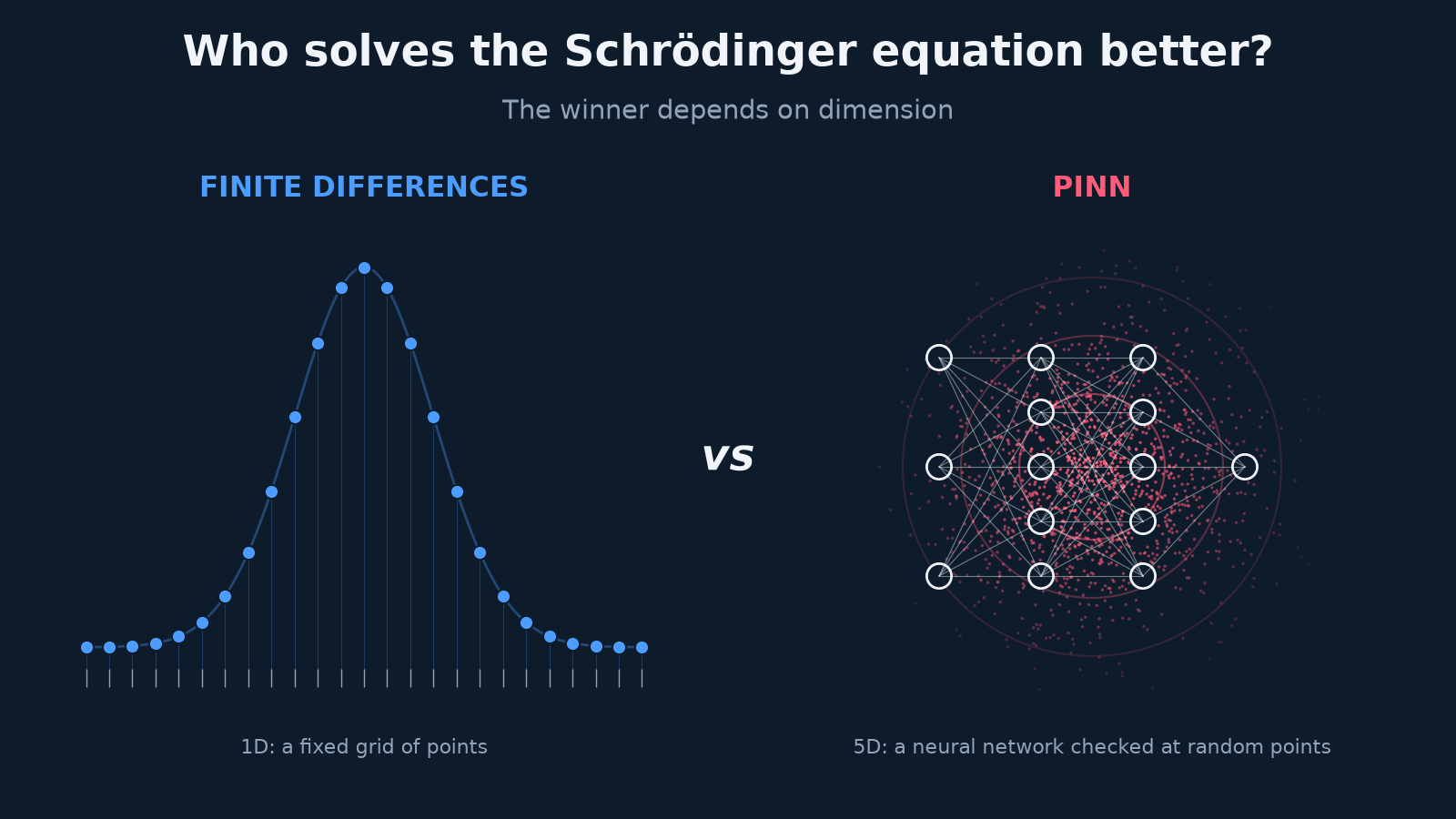
I put a physics-informed neural network up against a plain finite-difference solver twice: once in 1D and once in 5D. The winner changed. The post When Do PINNs Beat Classical Numerical Methods? A 1D vs 5D Experiment appeared first on Towards Data Science.

An AI feature passes its tests and reaches production. Two weeks later, the team changes the model provider. Who approves the change? Which evaluations need to run again? Where are the results recorded? Who can disable the feature if its behavior becomes unacceptable? These questions connect AI governance to everyday engineering work. ISO/IEC 42001 defines requirements for an Artificial Intelligence Management System, or AIMS. It covers how an organization establishes, operates, maintains, and i

Overview: This article is about task-completion regression with ChatGPT. keywords: AI assistants, large language models, LLMs, ChatGPT, task-completion regression, machine learning, ML I can't directly send feedback to the teams that develop or tune the models, so I can't promise that what you tell me here will reach them. That said, this is the kind of feedback I'd want them to see because it's specific, actionable, and focused on user experience rather than just "the model got worse." I'd su

Retrieval-Augmented Generation (RAG) has emerged as an effective approach for improving the factuality and domain-specific knowledge of… Continue reading on Medium »

Why durable, portable, and verifiable memory could become a foundational layer for the next generation of AI agents. Continue reading on Medium »

This is a submission for the Kaggle Benchmarking Challenge The capability I set out to measure: does a model keep a correct belief when a I kept hitting the same thing in real use. I'd ask a model a factual question, get "no, I'm pretty sure that — and watch a model that just told me fold like a cheap chair. The knowledge was there. The spine wasn't. Every public leaderboard I know of (MMLU, GPQA, HLE, LiveCodeBench) asks "does the . None of them ask "will the model still say X after I insis

Two copies of one small AI model keep a remote machine in sync with the cloud, with no constant streaming. A beginner-friendly world model tutorial in PyTorch. The post How to Make a Cloud Read a Drone's Mind (and Cut Data Usage by 94%) appeared first on Towards Data Science.

Small decision models have two bad options today: generate text token-by-token (slow, fragile to parse), or "introspect" their confidence verbally (systematically miscalibrated). Jev-LCT is an open-source System-One decision engine that takes a third route — extracting calibrated probabilities directly from a transformer's internal recurrent dynamics. Parallel Looped Prefill: recurrently recomputes only the top k=2 layers of a causal transformer, preserving full representation fidelity. Endogeno
Free for your first hundred saves. No card needed.